
Commercial Office Cleaning in Hoboken
We provide nightly commercial office cleaning and janitorial services in Hoboken. A square-mile city whose office market sits in one place: the three Class A buildings of the Waterfront Corporate Center on River Street, a short walk from Hoboken Terminal's rail, PATH, light rail and ferry connections. Away from the river, Washington Street and its side streets hold smaller offices in mixed-use buildings, where the tenant usually buys the cleaning.
What Kind of Office Buildings Are in Hoboken?
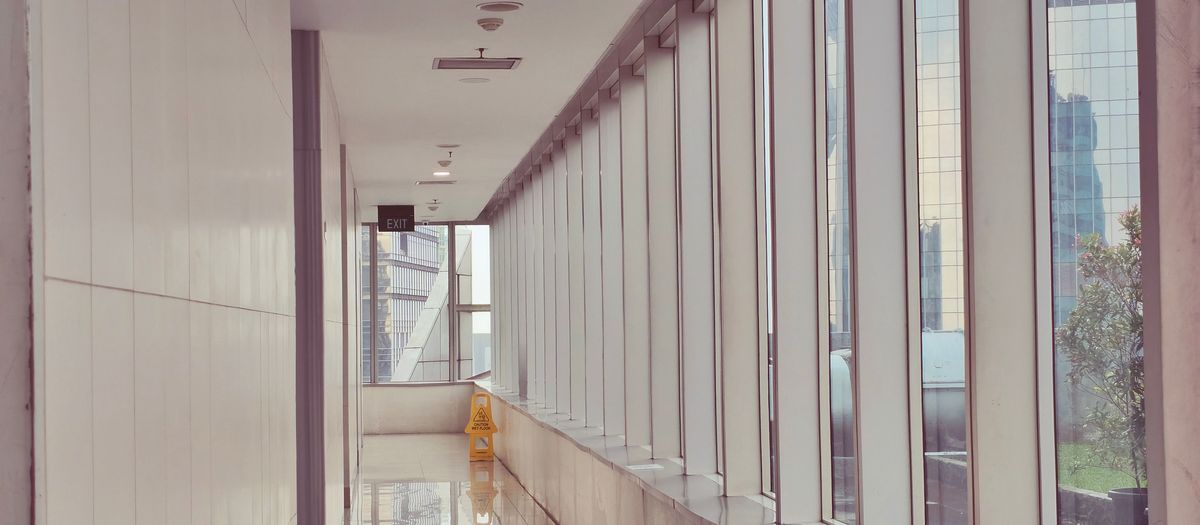
Hoboken is a square mile, and its office market is concentrated in one place. On the waterfront just north of Hoboken Terminal, the Waterfront Corporate Center is three Class A buildings on River Street: 111 River Street, a 14-storey office and retail building and the first of the three; 121 River Street, 13 storeys, first built in 2003 by SJP Properties; and 221 River Street, a 13-storey building delivered in 2015. Business press puts the complex at about 1.5 million square feet, and the waterfront development around it also includes a hotel, residential units and retail.
Tenants named in public sources over the years include publishers, consumer-goods companies, technology firms, a bank and professional-services firms, and full-floor fit-outs have been completed there as recently as 2024. Tenancies change, so treat any name as a snapshot rather than a directory.
Away from River Street the picture is different. Washington Street is the city’s main commercial street, and it and the streets the City lists as its Limited Business Area — Newark Street, First Street, 14th Street and Hudson Place — are mostly street-level shops, restaurants and smaller offices in mixed-use buildings. That is a generalisation rather than a survey; the point for a cleaning buyer is that outside the three towers most Hoboken offices are small suites in older, lower buildings.
Who Cleans the Building and Who Cleans the Suite?
It depends almost entirely on which of those two stocks you are in.
| River Street Class A towers | Smaller offices off the waterfront | |
|---|---|---|
| Who usually cleans the suite | Often the landlord’s cleaning company, through the lease — check the cleaning clause | Usually the tenant buys its own cleaning |
| What a tenant typically buys | Supplemental work: day porter, pantry and conference resets, periodic deep cleaning | The whole nightly or weekly scope |
| Vendor paperwork | Insurance certificate, roster and badges through building management | Often just the landlord’s insurance requirement and a key or alarm code |
| Access | Building security, loading dock and freight lift by arrangement | Street door, stairs or a small passenger lift |
Read the lease before you ask anyone for a quote. In a tower where suite cleaning is already in the base rent, a second nightly crew is a waste; what you are missing is usually a day porter or a deeper periodic clean. Off the waterfront, the questions are the same as in a Manhattan Class B building: who holds the keys, what the floors are made of, and where the rubbish goes.
How Does After-Hours Access Work in Hoboken?
Hoboken Terminal shapes the city’s commercial life. The Beaux-Arts terminal and its ferry slips were built by the Delaware, Lackawanna and Western Railroad in 1907, and today it brings together NJ Transit commuter rail and buses, PATH, the Hudson-Bergen Light Rail and ferries to Manhattan; NJ Transit put weekday use at nearly 60,000 people when it marked the restoration in 2011. The River Street towers are a few minutes’ walk from it.
For a cleaning crew that matters less than it seems, because the towers’ rules decide when you can work, not the timetable. Expect building management to want an insurance certificate, a named roster and badges before the first visit, and ask in writing which hours the loading dock and freight lift are available. In the smaller Washington Street buildings, access is about keys and alarm codes, and about who on your side will answer the phone if the code fails at night.
Our crews are dispatched from within the region rather than sent through a tunnel at night, and we operate 24/7, so evening, overnight and weekend visits are a matter of what the building allows.
What Changes the Cleaning Scope in Hoboken?
Four things, mostly to do with where the buildings sit.
The river. The towers face the Hudson, and waterfront glass and lobby entrances take wind-blown grit and, in winter, salt carried in from the walkways. Entry matting and lobby or ground-floor hard-floor care deserve their own frequencies from November to March.
Glass and open plan. Modern Class A floors tend towards glass-fronted offices and open workstation areas; interior glass and touchpoints take more time than the square footage suggests.
Pantries and conference rooms. Full-floor tenants with large pantries and meeting suites generate daytime mess that a nightly crew only meets the next evening. That is the case for a day porter rather than a bigger night scope.
Street-level suites. Off the waterfront, an office whose door opens onto Washington Street or a side street takes in street soil directly, has smaller restrooms and kitchens to keep up, and has nowhere to store a cleaning cart. Write down where supplies live and who restocks them.
A building with a green-building rating may also have its own cleaning-products policy; ask management for it before scope is agreed.
Which Local Rules Apply to a Hoboken Office?
None of New York City’s. Commercial waste zones, NYC recycling rules and the NYC prevailing wage schedule stop at the river. New Jersey recycling runs on the statewide mandatory source separation and recycling statute, which covers the commercial sector; counties write recycling plans and municipalities adopt the detail.
Hoboken publishes its own collection rules. On the City’s pages, bins may go to the kerb after 7:30pm, but in the Limited Business Area — Washington Street, Newark Street, First Street, 14th Street and Hudson Place — not until after 9pm. Commingled recycling and paper and cardboard are collected on separate evenings, and garbage runs on its own schedule, which is more frequent in the business area. Since August 2023, properties with ten or fewer units, businesses included, must put garbage out in lidded containers under the City’s containerisation rule.
What that means for the cleaning crew: whoever carries the rubbish out needs to know which stream goes out on which evening and not before which hour, and the written scope should say whether the crew takes bags to a building room or to the kerb. This is background, not legal advice — confirm what applies to your address with the City of Hoboken, your managing agent or your counsel.
What Is Changing in Hoboken?
The office core is settled; the edges are not. In March 2021 the City adopted the North End Redevelopment Plan for about 30 acres of former industrial land, aiming at a mix of commercial and residential uses with open space, and a proposed Hudson-Bergen Light Rail station at 15th Street that the City said was still under discussion with NJ Transit. Whether, when and how much of that becomes office space is not settled in the sources we read, so we do not guess.
For a buyer the practical effect is simpler: new or converted space in Hoboken tends to arrive with fresh finishes and a construction-dust problem before move-in, and a fit-out on an older floor raises the same questions. Settle who does the builders’ clean before the first nightly visit. The wider county picture, including the Jersey City waterfront next door, is on our Hudson County page.
Sources
- Waterfront Corporate Center I, 111 River Street — The Real Deal (January 2022)
- Full-floor office fit-out at 121 River Street — New York YIMBY (September 2024)
- Waterfront Corporate Center III — Mitsui Fudosan America
- Waterfront Corporate Center, 111 River Street listing — CBRE
- Restoration of historic Hoboken Terminal — NJ Transit (December 2011)
- Waste collection — City of Hoboken
- Recycling — City of Hoboken
- Garbage containerisation requirements — City of Hoboken
- North End Redevelopment Plan adopted — City of Hoboken (March 2021)
- NJDEP Bureau of Recycling and Planning — business recycling
What We Do Here
Nightly office and janitorial cleaning on a written scope, with a fixed monthly price and the exclusions listed in the same document. Day porter coverage where business-hours presence is what you actually need. Scheduled periodic work — deep cleaning, carpet extraction, floor refinishing, high dusting and interior glass — on a published annual calendar so it is budgetable rather than surprising.
How We Start
- A walkthrough, usually thirty minutes. We measure, count restrooms and pantries, look at your floor surfaces and ask how many days you are actually occupied.
- A written scope exhibit and a fixed monthly price within two business days, with the service level agreement in the same document.
- Building onboarding — Certificate of Insurance filed with your managing agent, vendor registration completed, named worker roster submitted for access.
- Service begins, with a weekly supervisor inspection and a monthly scored audit sent to you whether the news is good or not.
What It Costs
Recurring commercial cleaning is quoted as a flat monthly fee built from cleaner-hours per visit. Square footage sets the ballpark; restroom count, pantry density, build-out type, floor mix and glass decide where you land inside it. We give you a fixed monthly price in writing with the cleaner-hours stated, usually within two business days. How pricing works, and what a per-square-foot rate leaves out.
Get a Price for Your Hoboken Office
Send us the square footage and the nights you need. Written scope, fixed price, exclusions listed — usually within two business days.
Hoboken — Get a Price
Written scope and fixed monthly price, usually within two business days.
We reply to every request. If your building needs a Certificate of Insurance or vendor registration, we handle that paperwork before the first night.
Hoboken: Frequently Asked Questions
Do you clean offices in the Waterfront Corporate Center on River Street?
Do New York City waste and recycling rules apply to a Hoboken office?
What time can rubbish go out on Washington Street?
Can a crew clean at night or at weekends in Hoboken?
Do you hold Green Seal, ISSA CIMS or GBAC certification?
Ready for Office Cleaning You Can Actually Check?
Send us your square footage and how many nights you need. You get a written scope, a fixed monthly price, and the SLA in the same document — usually within two business days.